Running a business in the UK is all about hiring the best talent and growing your operations. But it also comes with a significant responsibility: you must follow a strict set of rules to keep your workplace safe and legal. These UK office regulations protect your people, reduce your liability, and give you peace of mind.
When you follow workplace compliance rules, you reduce risks, avoid costly fines, and prevent injuries. Meeting business space requirements also shows you take your role seriously, building trust with staff, clients, and partners alike.
Let’s walk through the key things you need to know to stay on track, whether you lease a traditional office or use flexible coworking spaces.
Health and Safety Requirements for Workspaces
Creating a safe office space is a legal obligation that UK businesses must follow under the Health and Safety Executive (HSE) guidelines. These HSE workspace regulations cover everything from physical space limits to air quality and rest facilities.
The Workplace Regulations 1992
Let’s start with the basics of physical space. Every person working in an office must have enough room to move and work comfortably. The law states that you need at least 11 cubic metres of space per person, calculated with a ceiling height limit of 3 metres. This prevents overcrowding and supports a healthy working environment.
You must also ensure the temperature is reasonable, typically at least 16 degrees Celsius for desk work, and that windows can be opened if there is no mechanical ventilation system. Additionally, many employers ask: does an employer have to provide a break room in the UK? Under these regulations, the answer is yes. Employers must provide suitable and sufficient rest facilities that are clean, easily accessible, and equipped with seating. Meeting these business space requirements keeps your team safe and your business compliant.
Display Screen Equipment Regulations
If your employees use screens, this rule applies. If staff use a computer, laptop, or tablet for a significant part of their daily work, they fall under this regulation. This is true even if they are working from home or using a flexible coworking space, as your duty of care as an employer still applies.
You need to assess their workstations, including chair height, screen positioning, and lighting. You should also encourage regular breaks or offer task changes to reduce eye strain and back pain. This part of workplace compliance is often overlooked, but a proper ergonomic setup shows you care and keeps you within the law.
Manual Handling Regulations
If your staff lift or move items at work, this rule protects them. Manual handling injuries are common and costly for businesses. You must train your team to lift correctly and avoid heavy lifting wherever possible. These UK office regulations apply in all settings, because even in a standard office, moving heavy boxes of documents or furniture the wrong way can lead to serious injuries.
Fire Safety and Emergency Procedures
Fire safety is a top priority in any workplace. It keeps people safe and meets strict UK office regulations.
Regulatory Reform (Fire Safety) Order 2005
This law makes you responsible for fire safety in your workspace. You must carry out a detailed fire risk assessment, update it whenever you change the workspace layout, and share the findings with your staff. This step is a cornerstone of workplace compliance.
Fire Safety Equipment
Your office needs the right equipment, including smoke alarms, fire extinguishers, and emergency lighting. Check them regularly and replace or repair any faulty items immediately. Up-to-date equipment meets business space requirements and saves lives.
Evacuation Procedures
If there is an emergency, everyone must know what to do. Create a clear escape plan, establish evacuation procedures, and run regular fire drills. Mark all fire exits clearly and keep them completely unlocked. Assign fire marshals to guide staff and visitors safely. A good evacuation plan is one of the most important parts of workplace compliance you will ever manage.
Accessibility Compliance and the Equality Act
Every business in the UK must follow the Equality Act 2010. This law protects people with disabilities and ensures fair access to workspaces. While US businesses look to ADA requirements for office space, the Equality Act is the UK equivalent that governs accessibility.
Physical Access Requirements
Ensure that your workspace is accessible and allows for easy movement. This includes ramps, wide doorways, and wheelchair-friendly restrooms. Individuals using a wheelchair or walker should not encounter obstacles when accessing or moving through the office. You may also need to provide reserved parking spots close to the entrance. These are basic business space requirements, and ignoring them can lead to complaints or legal action.
Reasonable Adjustments
If an employee or visitor has a disability, you must make changes that help them. These changes are called reasonable adjustments. You do not have to rebuild the entire office, but you must be fair and thoughtful. This is a key part of workplace compliance under the Equality Act, ensuring everyone has an equal opportunity to work comfortably.
Service Accessibility
Services must be accessible too. This includes websites, booking systems, and how you communicate. Use plain language and offer options like email or text. If someone needs help reading or understanding, be ready to support them. Accessibility touches every part of your business, not just the physical front door.
Data Protection and Privacy in Shared Spaces
Working in a shared space or coworking environment does not mean you can ignore privacy rules. You still need to protect all personal and business data. UK GDPR and the Data Protection Act apply no matter where you work.
When using shared spaces, make sure to lock your screen when leaving your desk and do not leave physical documents out in the open. Use strong passwords and encryption for client or employee information, and avoid talking about sensitive topics in open areas. Following coworking space house rules, such as clear desk policies and secure Wi-Fi usage, is a vital part of keeping your business compliant and secure.








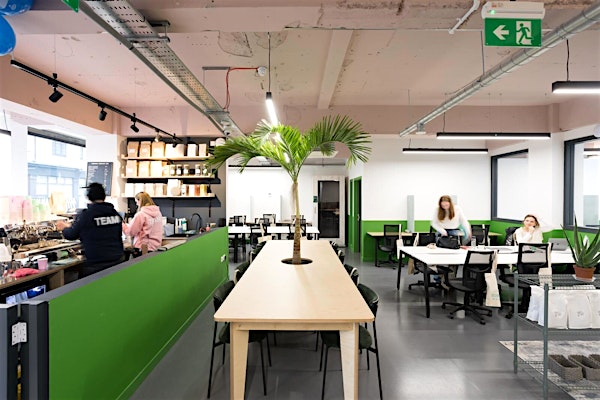


How Flowspace Ensures Full Compliance
Flowspace does not cut corners when it comes to UK office regulations. Every location in our network is designed with safety, accessibility, and professionalism in mind.
Comprehensive Safety Management
We take care of the details, from fire safety systems to routine health and safety checks. You do not need to worry about risk assessments or outdated equipment. Our team ensures every workspace meets legal standards for safe use.
Accessibility Standards
We make sure our spaces are easy for everyone to use. That means ramps, lifts, and accessible toilets, all part of meeting business space requirements and making them inclusive for all.
Professional Support
If you need help understanding a regulation or you are not sure about a specific setup, the Flowspace team is here to help. We negotiate rates and handle the legwork so you can stay compliant and focused on what you do best.
Flowspace helps you meet every part of workplace compliance with ease, whether you are a small team or a growing company. You can work with confidence in Flowspace’s fully compliant spaces that are accessible and always ready for business.
FAQ
What are the legal requirements for a coworking space in the UK?
Coworking spaces must comply with the Workplace (Health, Safety and Welfare) Regulations 1992, fire safety laws, and the Equality Act 2010. While the coworking operator manages building safety, fire drills, and physical accessibility, employers using the space still hold a legal duty of care for their employees’ health, safety, and workstation ergonomics.
Does an employer have to provide a break room in the UK?
Yes, under the Workplace (Health, Safety and Welfare) Regulations 1992, UK employers must provide suitable and sufficient rest facilities for their workers. These facilities should be easily accessible, include seating, and be clean. For pregnant or nursing workers, there must also be a suitable space to rest.
What are the HSE workspace regulations regarding desk space?
The Health and Safety Executive (HSE) enforces the Workplace Regulations 1992, which state that workrooms should have enough free space for people to move around easily. The minimum volume is 11 cubic metres per person, calculated using a maximum ceiling height of 3 metres.
How do UK accessibility laws compare to ADA requirements for office space?
While the Americans with Disabilities Act (ADA) applies in the US, the UK equivalent is the Equality Act 2010. Under this act, employers and building operators must make reasonable adjustments to ensure workers with disabilities are not disadvantaged. This includes physical changes like ramps, lifts, and accessible toilets.
What are typical coworking space house rules regarding compliance?
Coworking house rules usually combine legal compliance with shared etiquette. They typically cover fire evacuation routes, clear desk policies for GDPR data protection, secure Wi-Fi usage, and guidelines on using shared facilities like meeting rooms and phone booths responsibly.